Xreal One vs Xreal One Pro – Which AR Glasses Should You Choose?
Augmented Reality (AR) is shaping the future of digital interaction, and Xreal (formerly Nreal) is leading the way. With the release of the Xreal One Pro, many buyers now face the big question: Xreal One vs Xreal One Pro – which one is right for you?
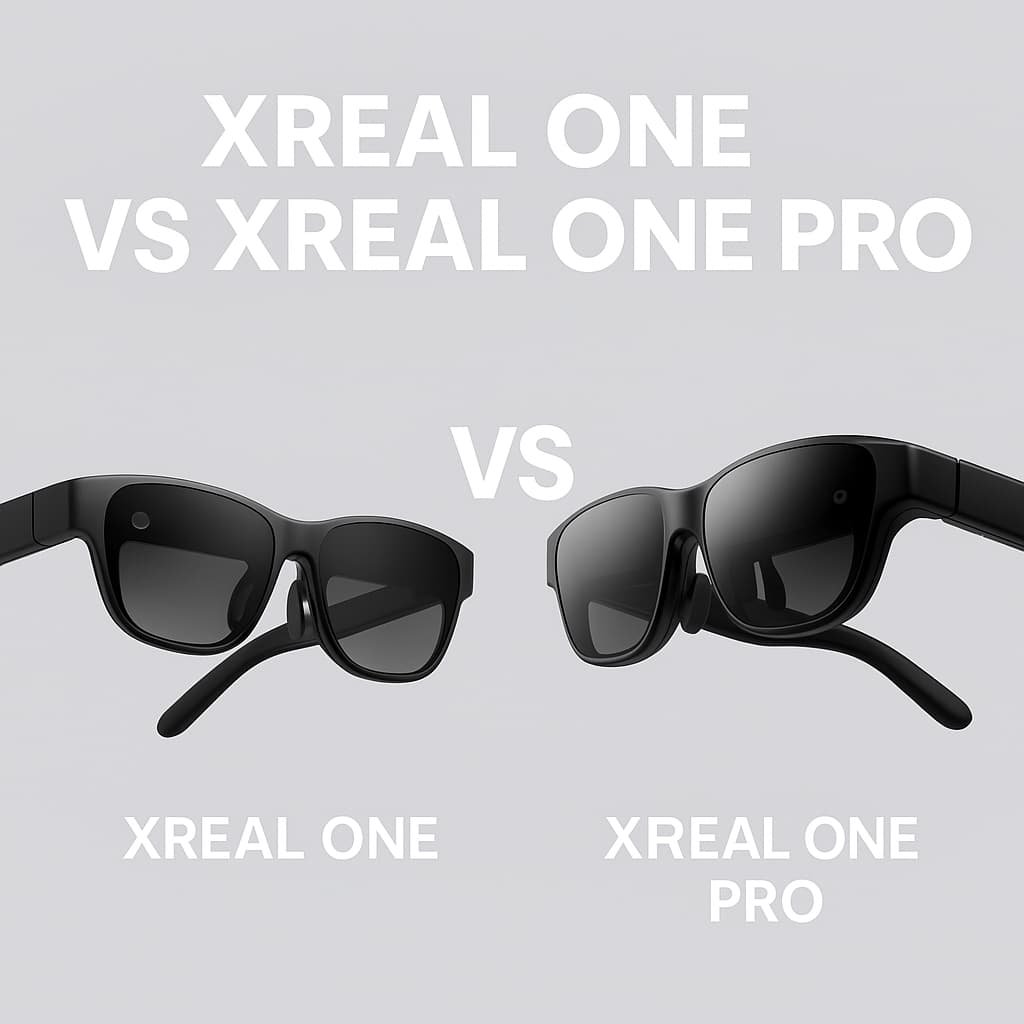
Whether you are a casual user or an AR enthusiast, understanding the differences between the Xreal One vs Xreal One Pro is essential. In this guide, we compare design, display, performance, tracking, connectivity, battery, and value so you can make the best decision.
🕶️ Design and Comfort
Xreal One: Sleek and Lightweight
The Xreal One is built for comfort. Weighing around 84g, it feels similar to regular sunglasses and is easy to wear for long sessions. The flexible frame and soft nose pads reduce pressure on your face.
Xreal One Pro: Premium Build Quality
The One Pro looks similar but feels more refined thanks to upgraded internal optics and materials. It is slightly heavier at about 87g but offers improved durability and better hinge design.
✅ Verdict:
Choose the Xreal One for lightweight comfort. Choose the Pro if you prefer a sturdier premium feel.
📺 Display Technology and Visuals
Both models feature 1080p Micro-OLED displays per eye and support 120Hz refresh rate for smooth visuals.
Xreal One
Delivers up to 600 nits brightness, offering vivid colors and sharp clarity for indoor and shaded outdoor use.
Xreal One Pro
Reaches around 700 nits peak brightness and uses a new flat-prism optical system, which delivers better edge clarity, higher contrast, and a noticeably wider 57° field of view compared to the One’s 50°.
✅ Verdict:
The Pro wins with brighter output, wider FOV, and superior optics.
⚙️ Performance and Processing Power
Xreal One
Uses the X1 spatial computing chip and relies on a connected device such as a phone, PC, or Beam for full AR functionality.
Xreal One Pro
Also uses the X1 chip, but with improved optics and internal tuning that delivers smoother visuals and better responsiveness. Both still depend on a host device for most AR tasks.
✅ Verdict:
Both perform well, but the Pro feels more refined and responsive.
🧠 Tracking and Sensors
Xreal One
Provides 3DoF head tracking for basic AR overlays and content viewing.
Xreal One Pro
Also offers 3DoF by default, but supports 6DoF tracking via the Xreal Eye accessory, enabling spatial movement and more immersive experiences.
✅ Verdict:
The Pro offers more advanced AR potential when paired with accessories.
🔌 Connectivity and Compatibility
Xreal One
Connects via USB-C to smartphones, PCs, consoles, and the Xreal Beam.
Xreal One Pro
Supports the same wired setup but adds better optimized workflows for wireless casting solutions and future ecosystem features.
✅ Verdict:
Both are compatible across platforms, but the Pro is more future-ready.
👤 Use Cases
Xreal One – Best for Casual Users
Ideal for watching movies, gaming, and phone mirroring.
Xreal One Pro – Best for Power Users
Designed for developers, creators, and immersive AR experiences.
✅ Verdict:
Everyday media users → One.
Advanced AR explorers → Pro.
🔋 Battery Life
Xreal One
No internal battery – powered by your connected device.
Xreal One Pro
Includes an internal battery for limited wireless usage, though official endurance figures vary by use case.
✅ Verdict:
One = unlimited tethered use.
Pro = portable flexibility.
💰 Price and Value
| Model | Price |
|---|---|
| Xreal One | ~$399 |
| Xreal One Pro | ~$699 |
✅ Verdict:
Budget-friendly entertainment → One.
Premium immersive AR → Pro.
🛒 Where to Buy
🏁 Final Decision – Xreal One vs Xreal One Pro
| Feature | Xreal One | Xreal One Pro |
|---|---|---|
| Brightness | 600 nits | 700 nits peak |
| Field of View | 50° | 57° |
| Tracking | 3DoF | 3DoF (6DoF via accessory) |
| Optics | Birdbath | Flat-prism |
| Best For | Media & casual users | Developers & AR enthusiasts |
| Price | ~$399 | ~$699 |
Choose Xreal One if you want affordable, lightweight AR glasses for entertainment.
Choose Xreal One Pro if you want cutting-edge optics, wider immersion, and long-term AR potential.